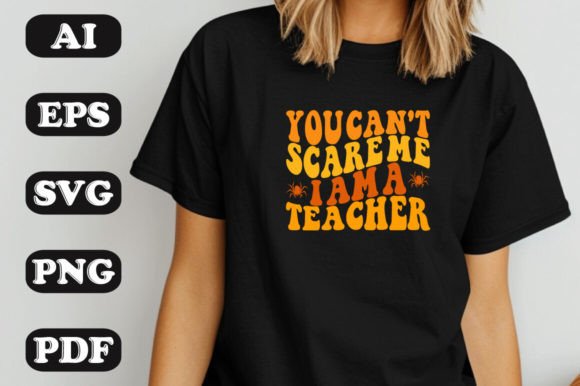
You Can't Scare Me Teacher Halloween Design Review
As an embroidery digitizer and product reviewer, I approach every new graphic with a specific question: will this actually stitch out cleanly on fabric? When evaluating the "You Can't Scare Me I Am, a Teacher Hallo" design, my assessment goes far beyond the cute screen preview. This machine embroidery design carries a distinct personality that blends professional pride with seasonal whimsy, but translating those vector lines into thread requires careful consideration of stitch density, fabric choice, and end-use application.
First Impressions and Visual Hierarchy
The layout of this design immediately suggests a bold, confident statement. The phrase "You Can't Scare Me I Am, a Teacher" relies heavily on typography, which is both its greatest strength and its potential pitfall in embroidery. From a designer’s perspective, the visual weight feels balanced for a center-chest placement or a tote bag focal point. The Halloween element adds just enough seasonal flair without overwhelming the text, making it versatile for educators who want to participate in holiday spirit while maintaining a polished look.
However, because this originates as a graphics asset including AI, EPS, SVG, PNG, and PDF files, we must remember that vectors are not stitches. The clean lines you see in Adobe Illustrator do not automatically account for thread pull, fabric distortion, or the physical limitations of satin stitch columns. Before loading this digital embroidery file into your machine software, you must assess whether the lettering has been properly digitized for textile use or if it remains a flat graphic requiring manual conversion.
Real-World Application: The Teacher Tote Bag Test
To truly evaluate this design, I mentally placed it on a canvas tote bag, a staple item for teachers carrying books and supplies. In this real-life scenario, the design needs to withstand friction, washing, and the natural drape of unstructured cotton. A rigid, overly dense fill stitch would make the bag stiff and prone to puckering, while a running stitch might get lost in the canvas weave.
For a custom apparel project like a sweatshirt, the "You Can't Scare Me I Am, a Teacher Hallo" design offers excellent commercial potential for Etsy sellers targeting school staff. Teachers love personalized gifts that acknowledge their resilience. If stitching this on a fleece sweatshirt, the texture of the fabric becomes a variable. Fleece can swallow fine details, so the design’s bolder elements are advantageous here. However, if you are creating an embroidered patch instead, the smaller scale demands tighter registration and potentially simplified internal details to prevent thread breaks or illegible text.
Navigating Fabric Challenges and Hoop Sizes
Not all fabrics treat this design equally. When working with stretchy knits for t-shirt embroidery, stabilizer selection is non-negotiable. The horizontal span of the text means that without adequate cut-away stabilizer, the fabric will tunnel between letters, distorting the message. I always recommend testing on scrap fabric first, especially when moving from a stable woven cotton to a performance blend or jersey knit.
Hoop size also dictates success. While the included SVG and PNG files allow for infinite scaling on screen, your embroidery machine has physical limits. If you attempt to shrink this design down for a baby embroidery project or a sleeve cuff, verify that the smallest text elements remain above 4mm in height. Anything smaller risks becoming a tangled mess of thread. Conversely, enlarging the design for a large pillow cover or blanket requires checking stitch density; simply stretching a digitized file can result in sparse, gap-filled stitches that look unprofessional and lack durability.
Critical Considerations for Dark and Textured Materials
Color contrast defines readability. On dark fabrics, ensure the thread colors provide sufficient pop against the background. A black outline on a navy sweatshirt will disappear, undermining the design's impact. For textured fabrics like terry cloth tea towels or minky blankets, consider using a water-soluble topping to keep the stitches sitting on top of the pile rather than sinking in. This is particularly important for the intricate parts of the Halloween graphics where detail matters most.
- Stretchy Fabrics: Always use cut-away stabilizer to prevent distortion during wear and washing.
- Dark Garments: Test thread color contrast in natural lighting before committing to a full production run.
- Textured Surfaces: Apply water-soluble topping to maintain stitch definition on towels or fleece.
- Curved Items: Caps require specialized hooping and potentially a modified version of the design to accommodate the curve.
Commercial Viability and Professional Presentation
For small business owners and craft entrepreneurs, this design holds significant value as a seasonal seller. However, customer trust hinges on the quality of the finished product. A poorly executed stitch-out reflects badly on your brand, regardless of how good the original vector art looked. When listing this as part of your handmade product line, high-quality printable mockups are useful for previews, but nothing replaces photos of the actual stitched sample. Buyers need to see how the satin stitch interacts with the fabric and how the design drapes.
If you are selling the digital embroidery file itself rather than the physical item, transparency is key. Clearly state the tested hoop sizes, recommended fabrics, and stitch types. Since the product includes source files like AI and EPS, advanced users may wish to modify the design. As a seller, providing notes on which elements are safe to resize and which require re-digitizing adds immense value and reduces customer support inquiries.
Designer Notes for Optimal Results
Before adding "You Can't Scare Me I Am, a Teacher Hallo" to your production queue, run through this practical checklist. These steps separate hobbyist attempts from professional-grade embroidery projects.
- Verify Licensing: Confirm whether your purchase allows for commercial use of finished products, digital files, or both. Never assume rights based on file format alone.
- Test Stitch Density: Run a sample on your intended fabric. Check the back for excessive bobbin thread or tightness that causes puckering.
- Inspect Small Details: Zoom in on the digitized file to ensure tiny accent marks or punctuation are large enough to stitch clearly.
- Evaluate Washability: If making items for frequent use like aprons or baby clothes, ensure the stitch type can withstand laundering without fraying.
- Mockup Validation: Compare light and dark fabric backgrounds digitally before cutting material to ensure the design reads well in both contexts.
Ultimately, this design succeeds when treated as a collaboration between digital art and textile engineering. Whether you are crafting a personalized gift for a favorite educator or building a seasonal collection for your shop, respecting the technical requirements of machine embroidery ensures the final result honors both the sentiment and the craft. Take the time to test, adjust, and validate, and this teacher-themed Halloween graphic will translate beautifully from screen to stitch.