In My Science Teacher Era SVG: A Maker's Review
As a designer who bridges the gap between digital graphics and tangible textiles, I approach every new file with a specific question: will this actually work when thread hits fabric? The In My Science Teacher Era SVG is currently trending in the digital marketplace, capitalizing on the popular "era" aesthetic that has taken over social media. While this listing is explicitly formatted as a digital cutting file for Cricut or Silhouette machines, its potential extends far beyond vinyl decals. For embroidery designers, Etsy sellers, and apparel decorators, this graphic serves as an excellent foundational asset for creating custom merchandise, provided you understand how to translate vector lines into stitch paths.
Translating Digital Trends to Stitched Reality
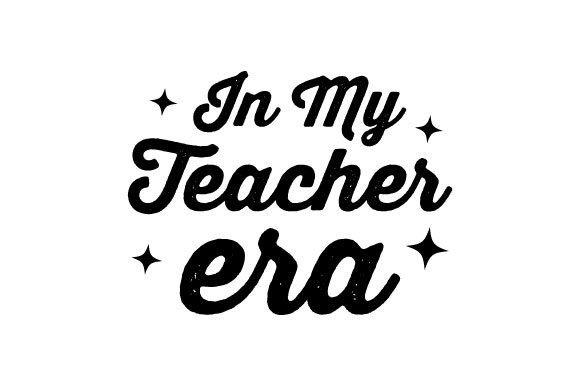
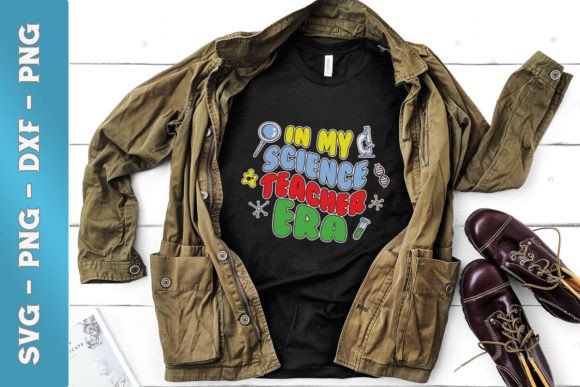
My first impression of the In My Science Teacher Era SVG is that it captures a specific nostalgic yet modern mood perfectly suited for the education niche. The typography typically associated with this trend balances retro serif fonts with clean, bold spacing. From a design perspective, this is a goldmine for custom apparel. However, because this is originally a cutting file, we must evaluate it through the lens of digitization. The shapes are distinct and separated, which is ideal for converting into an applique design or color-blocked embroidery. Unlike intricate illustrations that require thousands of fill stitches, this text-based layout allows for efficient production times while maintaining high visual impact.
For those in the Crafts category looking to expand their product lines, this design feels less like a generic clipart and more like a brandable asset. It carries a visual personality that appeals to millennial educators and science enthusiasts who want gear that feels current rather than dated. When evaluating Graphics for textile use, clarity is king. This SVG offers the crisp edges necessary for clean digitizing, meaning your satin columns won't have jagged steps, and your running stitches will follow smooth curves.
Real-World Application: The Faculty Lounge Sweatshirt
To truly test the viability of this design, I recently approached it with a specific project in mind: a heavyweight crewneck sweatshirt intended as a personalized gift for a high school chemistry teacher. In this real-life scenario, the goal was to create something that looked boutique-quality rather than homemade. Using the In My Science Teacher Era SVG as my base, I mapped out a placement for left-chest embroidery.
The result highlighted why this design works so well for sweatshirt embroidery. The lettering scale was substantial enough to remain legible from a conversational distance, yet compact enough to avoid the "bulletproof vest" effect where dense stitching distorts the garment. For a handmade product, this balance is critical. Customers judge value based on how professional the finish looks. Because the design relies on strong typographic hierarchy, it allowed me to use contrasting thread colors—perhaps a deep navy body with cream lettering—to maximize readability without increasing stitch density unnecessarily. This project confirmed that the design transitions beautifully from screen to fabric, making it a reliable choice for Etsy seller listings targeting the back-to-school or teacher appreciation seasons.
Navigating Fabric Limitations and Hoop Constraints
While the design is versatile, practical experience dictates caution in certain applications. Not every substrate is friendly to text-heavy designs derived from SVGs. If you are planning to use this for baby embroidery on onesies or stretchy knits, you must adjust your expectations and your digitizing settings. The bold nature of the "Era" font can become too heavy for lightweight cotton jersey. In these cases, I recommend modifying the design to a single-color running stitch outline or reducing the overall size significantly to prevent puckering.
Similarly, be mindful when applying this to textured fabrics like terry cloth towels or fleece blankets. The fine details often present in science-themed accents (like tiny atoms or beakers accompanying the text) can get lost in the pile. For a tote bag design or canvas apron, the structure holds up beautifully. However, for curved surfaces like caps, the horizontal span of the phrase "In My Science Teacher Era" may exceed the safe stitch area of a standard cap frame. Always verify your hoop size before committing to a production run. If you are working with dark fabrics, ensure your digitizing software accounts for pull compensation; light thread on dark material tends to shrink visually, making the letters appear thinner than they do in the digital preview.
Elevating Product Value and Brand Consistency
Using trending assets like the In My Science Teacher Era SVG does more than just sell a single item; it signals to your audience that your shop is culturally relevant. For small shop product owners, staying current builds trust. When a customer sees a design that reflects their current identity, the perceived value of the finished product increases. This is particularly true for commercial embroidery projects where schools or departments might order bulk items. A cohesive, trendy look suggests professionalism and attention to detail.
Furthermore, this design’s adaptability makes it perfect for creating consistent branding across multiple mediums. You can use the original SVG for vinyl stickers on water bottles and the digitized version for embroidered patches on lab coats. This cross-medium consistency strengthens brand recognition for both the maker and the end-user. Whether you are selling a personalized gift or building a collection of teacher merch, the visual continuity provided by this specific graphic style enhances the overall presentation and buyer engagement.
Essential Notes for Makers and Digitizers
Before you load this file into your software or start selling finished goods, please adhere to these practical guidelines to ensure success and compliance:
- Verify Licensing Terms: This listing specifies compatibility with cutting machines. It does not explicitly state commercial embroidery rights. Always confirm whether you have permission to sell physical items made from this design or if it is restricted to personal use.
- Test Stitch Density: Since this is a vector graphic, any embroidery file created from it is a derivative work. Test your digitized version on scrap fabric first to ensure the stitch density is appropriate for your chosen material.
- Check Thread Contrast: Create black and white mockups before stitching. If the design disappears in grayscale, it lacks sufficient contrast for embroidery. Adjust thread colors accordingly.
- Stabilizer Selection: For knit fabrics, always use a cut-away stabilizer to maintain the shape of the lettering. Tear-away is rarely sufficient for text-heavy designs on stretchy materials.
- Small Detail Warning: If the SVG includes microscopic scientific icons, consider removing them for sizes smaller than 3 inches. They will likely turn into thread blobs at reduced scales.
- Mockup Accuracy: Use realistic printable mockups that show texture. Flat digital previews can be misleading regarding how satin stitches reflect light versus matte cotton fabric.
Ultimately, the In My Science Teacher Era SVG is a fantastic starting point for creative entrepreneurs willing to put in the technical work to adapt it for needle and thread. By respecting the limitations of the medium and leveraging the strengths of the typography, you can transform a simple digital download into a premium embroidered product that resonates deeply with the science teaching community. Remember, successful machine embroidery is about marrying artistic vision with mechanical precision. Take the time to test, adjust, and refine, and your finished projects will stand out in a crowded marketplace.