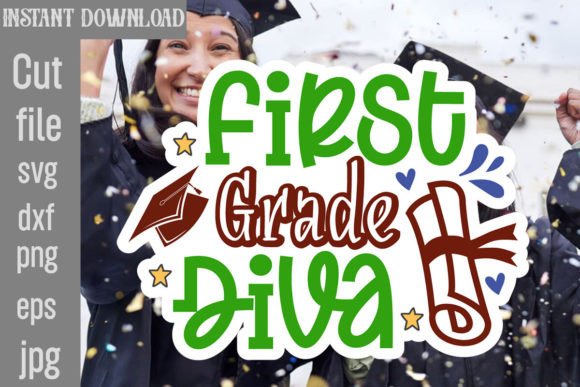
First Grade Diva SVG Cut File Review
As a professional embroidery designer and product reviewer, I approach every new digital asset with a critical eye. When evaluating the First Grade Diva SVG Cut File, my primary concern is not just how it looks on a screen, but how it translates into thread on fabric. This review dissects the design from the perspective of a maker preparing for real-world production, specifically focusing on its viability for custom apparel and personalized gifts in a small business setting.
Translating Vector Graphics to Stitched Reality
The First Grade Diva SVG Cut File arrives as a digital download containing SVG, DXF, EPS, and PNG formats. While these are marketed primarily as cut files for vinyl and paper crafts, an experienced embroiderer sees them differently. The EPS vector file is the gold mine here. Before importing this into digitizing software, I assess the visual personality. The design carries a playful, youthful energy that immediately suggests specific applications: back-to-school merchandise, birthday party favors, or boutique children’s wear.
However, a graphic designed for cutting machines often lacks the structural considerations required for a machine embroidery design. Vectors have zero thickness; stitches do. My first impression is that while the silhouette is charming, the internal details must be scrutinized. If the "Diva" typography is too thin, it cannot support a standard satin stitch without risking thread breaks or fabric puckering. Conversely, if the elements are too bold, they may require excessive fill stitch density, which can make a lightweight garment stiff and unwearable. As a reviewer, I value this asset as a high-quality base template, but I advise fellow designers to treat it as a starting point for digitization rather than a ready-to-stitch solution.
Real-World Application: The Custom Sweatshirt Test
To truly judge this design, I mentally place it in a current client scenario: creating a line of personalized sweatshirts for a local elementary school fundraiser. This is where the First Grade Diva SVG Cut File faces its toughest test. Sweatshirt fleece is textured and stretchy, two enemies of crisp embroidery.
In this context, the design’s layout matters immensely. A centered chest placement works best for this aesthetic. I envision using the PNG file (300 DPI) to create a printable mockup for client approval before a single needle drops. This saves time and manages expectations. For the actual sweatshirt embroidery, I would likely adapt the design into an applique design. Using the SVG outline as a placement guide allows me to cover large areas with fabric rather than dense thread, keeping the garment soft and reducing production time. This adaptation transforms a simple graphic into a premium handmade product that parents are willing to pay a higher price point for.
If applique isn't an option, converting the bold elements to a running stitch or bean stitch can maintain the playful vibe without the bulk of satin columns. This flexibility is what makes this graphic valuable for Etsy sellers and small shop products who need versatile design assets that work across multiple mediums.
Critical Considerations for Fabric and Hoop Size
Not every project suits this aesthetic, and knowing where *not* to use the First Grade Diva SVG Cut File is as important as knowing where to use it. I would exercise extreme caution when applying this to structured items like caps or curved surfaces. The flat geometry of a cut file does not account for the distortion inherent in cap embroidery. Unless you are skilled at compensating for push-and-pull distortion during digitization, the lettering may warp unflatteringly.
Fabric texture also dictates success. On smooth cotton poplin or quilting fabric, the design will shine. On terry cloth towels or minky blankets, fine details will get lost. If you plan to use this for baby embroidery on plush fabrics, you must simplify the design significantly. Furthermore, consider the hoop size. This design likely has a specific aspect ratio. Scaling it down to fit a 4x4 hoop might render tiny text illegible once stitched. Always verify dimensions against your machine's capabilities before committing to a commercial embroidery run.
Dark fabrics present another challenge. Since this is a digital graphic, it doesn't come with pre-assigned thread colors. You must visualize contrast. White or metallic threads on navy fleece create that classic "diva" pop, but low-contrast combinations will look muddy. Always test thread color contrast physically; screens are deceptive.
Professional Standards and Business Value
For creative entrepreneurs, the value of the First Grade Diva SVG Cut File extends beyond a single project. It serves as a branding tool. Consistency builds trust. Using cohesive graphics across tote bag designs, patches, and apparel creates a recognizable boutique identity. However, professionalism requires diligence. Because this is a digital graphic and not a native embroidery file, you are responsible for the stitch integrity.
I strongly recommend testing the digitized version on scrap fabric identical to your final product. Check stitch density to ensure it doesn't perforate the material. Inspect small corners and tight curves; vectors are perfect, but needles have width. If the design includes intricate flourishes, they may need to be removed or thickened to prevent bird-nesting. This quality control step distinguishes a hobbyist from a professional apparel decorator.
Additionally, verify licensing. Just because you own the SVG does not automatically grant rights to sell finished embroidered goods or distribute the digitized version. Respecting intellectual property protects your business reputation. When used correctly and legally, this asset enhances the perceived value of your personalized gift offerings and streamlines your workflow.
Designer Notes for Successful Implementation
Before adding this to your next embroidery project, review this practical checklist derived from professional experience:
- Digitize with Intent: Do not auto-digitize. Manually assign stitch types to ensure the "Diva" theme feels intentional, not mechanical.
- Stabilizer Selection: Match stabilizer weight to the fabric. Cut-away backing is essential for stretchy knits to prevent distortion of the graphic lines.
- Mockup Verification: Use the included 300 DPI PNG to show clients exactly what to expect. This reduces revision requests for custom apparel orders.
- Detail Audit: Measure the smallest element in your software. If it is under 1mm wide after scaling, redesign it. Needles cannot reliably stitch microscopic details.
- Wash Testing: If selling holiday embroidery or school gear, wash-test a sample. Ensure the stitch coverage holds up to frequent laundering without fraying.
- Format Flexibility: Utilize the DXF for Silhouette users and SVG for Cricut users to offer matching vinyl decals alongside your embroidered items, increasing average order value.
The First Grade Diva SVG Cut File is a promising asset for makers in the Crafts and Graphics categories, provided it is treated with technical respect. It offers excellent versatility for back-to-school seasons and children's boutiques. By approaching this vector art with an embroiderer’s mindset—prioritizing structure, fabric compatibility, and stitch mechanics—you can elevate a simple digital download into a profitable, professional-grade product line. Remember, the file provides the vision, but your expertise provides the quality.